All Activity
- Past hour
-
Whoa! I hadn't heard about Greg Biffle until seeing you're comment and looking it up! I remember watching him race... 😮
-
The program really dislikes heavy projects with deep Side Chain application. I'm afraid of Sonar, it may suddenly start making some sounds, and then turn off. There are scary red numbers on the indicators, and my ears are ringing. And this has been happening for a very long time and very often on loaded projects. But I have good equipment. And I'm not surprised that daw Sonar surveys conducted on various resources don't even have a choice.
-
Try lowering your buffer when recording. Raise it again when mixing or playing
-
Cool to see a freebie from U-he on the list! https://u-he.com/products/podolski/
-
Great seeing these getting better pricewise and simple perpetual options with no mandatory hardware iLok. They have left their run a little late for a lot of people, as many of us now stocked up on UAD etc. when they all got more reasonable.
-
Great stuff - thanks for the idea and the links! I've seen Scaler mentioned but hadn't realized that was how people were using it.
-
🎄 Xmas Offer: HALO 2 + RAW Expansion free 🎁 - Over 70% Off https://dhplugins.com/halo-2/
-
Cherry Audio: Free Mercury-8 Presets! https://store.cherryaudio.com/presets/retrograde-for-mercury-8
- Today
-
MIDI Box 1 by Cartel Loops (limited-time free) https://vstalarm.com/product/midi-box-1-by-cartel-loops-limited-time-free/
-
🎇 Vicious Antelope: Merry Discounts 💠 Free Zebralette 3 Presets https://www.viciousantelope.com/product-page/mysterious-silence-free-zebralette-3-presets
-
Another option is enabling MIDI output on a VSTi that has an internal arpeggiator and route its Output to the VSTi you want to use it on. This is essentially how Scaler is predominantly used even though it does have internal sounds. A couple lists you might want to checkout are: Section 2 of the Content Section on this page, the Best Free Arpeggiator Plugins, and The 7 Best Free Arpeggiator VST Plugins 2025 (a couple in there are included in the first link)
-
 Interesting point. The issue only arose when I had to change computers and as a result installed the latest version of Sonar (2025.11). I believe I was at 2025.8 on the old computer. I had not experienced the issue prior to the computer update/upgrade either on CBB or on the new Sonar. Or on Sonar Platinum for that matter.
 -
I have only used the vst version, usually in an Aux channel or in a Reverb Bus. I haven't tried all of the projects that I think have Breverb, mostly because the work around of using an alternative Reverb is working. I basically am only working on my own projects or occasional demo projects for friends so I am more easily satisfied than paying clients might be.
-
Thanks for the very detailed reply! Will need to try the one built in to Cakewalk a bit more, as so far I've had it crash or do nothing - but I'm sure it's user error!
-
 I called this a while ago in another thread floating around the forum here somewhere. It's impossible for it not to happen.
 -
Usually arp is done to the midi before it reaches the synth, if it's not an internal function of the synth. I don't know about the modern Sonar, but my ancient one has an arp in each midi track, though it is not as easy to use or as functionally elegant as it could be (thsi may have changed). This arp effectively works like an MFX in the bin, applying in realtime to the clips in the track, or can be bounced to new clips, etc. You can do quite a bit of stuff with it. My track Just Give Me A Voice has a piano / strings interplay that was created using the per-track arp to make the midi clips based on my playing, then I edited the resulting clips to create the midi that then drove the sounds you hear. Each sound I used has a different velocity curve, so t hey both respond differently to the same MIDI. Usually I use the arp that's built into a synth if it has one, and almost always I use Z3TA+2 for synth stuff (which also allows you to use your own MIDI pattern for the arp).. There are also other arp fx, probably some VSTs for this, and somewhere I have some arp MFX I thihk, but haven't used them enough to even remember their names. Some arps dont' ahve all the features needed to be really useful, but generally they'll need to have a way to either run free at whatever time signature or tempo they are set at, or to sync to host, and wehther or not to restart the pattern on every note you start, or simply jump into the pattern at that point in the sequence so the pattern stays locked to the song's measure/beat, etc. Some arps have no velocity modulation built in--if you press a note at a velocity, all the notes in the arp pattern will be at that velocity. Some have velocity for each note in the pattern, and teh velocity you play determines the base velocity these are modulated around. Some primitive arps only play at the velocity they were set to or patterned at, and dont' respond to your actual note velocity. Etc. VBeing able to create my own patterns for an arp is a necessity, and being able to export the pattern already there (drag to a lcip, bounce to a clip, etc) so I can edit it and do what's needed with it, is another one. You might not need this...but if you could do it you might find a universe of possibilities. I often play arped stuff to delays, usually some form of pingpong, often a 3/2, or a specific time like 450ms one side, 600 the other, and may have to edit the pattern to work with that.
-
 BastianSeb joined the community
 -
I'm not sure you understood what I meant by if the roles were reversed, and it's my fault because I was being very cryptic as to not have the administrative hammer fall. My point was if the guy who made the post in very bad taste were in the other guys place, post like that would be abound and it would be accepted. There wouldn't be the outrage. It's just an observation, not an endorsement for what was tweeted in other words. Back to the OP topic. I've been seeing a lot of reels pop up on my cell of clips of Meathead and Arch going at it. I never cared for it growing up, but now I get it and it was actually a very deep show. They were actually trying to make a point and send a message. I don't think people realized that Arch was the butt of the jokes in that show. I know they didn't because I've seen interviews with him where he said people would come up to him on the street and go off on him and he had to explain what the show was actually about. Lol. Another horrific tragedy recently was Greg Biffle. Him, his entire family, and several other people, gone in seconds. It's all sad and unbelievable.
-
I like the color customizations, and I realize the bugs are not worked out yet. Eager for when we can save them and have them reliably load into workspaces, etc. PLEASE, PLEASE make the menu backgrounds and font match some of the other surfaces. Right now the bright white is killing me, and there are other menus with neutral grey that have nothing to do with colors I have set as background/foreground in the editor. I hope the probing/signal meters and core plugins can also take on colors that are not all orange. I get that the brand is orange, but it is hard on the eyes if too much orange is on the screen for me.
-
While I agree the flat look can be tedious and sometimes miss a GUI with depth, it is very common in all apps and plugins these days because flat vector graphics can be drawn with simple 2D vector graphics (pixel and shape instructions essentially) rather than actual libraries of image files (raster GUI). This makes scaling to the huge variety of screen setups and resolutions possible without major issues or blurry interfaces, whereas old bitmap programs ad plugins often look quite bad. 3D elements can be implemented with vector graphics, but it is not easy, more CPU heavy, and not super popular right now in GUI design. I have a 5K2K monitor at 21:9 aspet ratio and Sonar looks beautiful in clarity, although I do miss some 3D defiition around some controls and areas. I think the devs could add some subtle dark shadow type shapes in a couple areas to make a compromise one everyone tires of the flat look. Maybe over time we will get a few 3D vector graphics to spice things up?
-
Demos say yes, I guess is would be a 25 dollar risk if you use that voucher.
-
Staggered as in everything plays off time, some tracks play on time, others come in late. But it only happens when I hit record. If I just play it, it plays normally. Also, I have my buffer already at 2048, that's where I set it for mixing. Lastly, not a single plugin is turned on, cause it's just the static mix, so only volume and panning has been set, nothing else. Thanks for replying, I really appreciate the help
-
Not quite sure what "staggered" means, but it could be active plugins with a look-ahead buffer somewhere in the project. If you are still running tracking buffers, you could try bumping those up to see if that helps. Even Melodyne (as an FX) recommends a pretty massive buffer (like 2048) to function properly if actively running in a project.
-
Hey guys, I was working on a mix today, and usually in my mixes I have 2 aux tracks. One is called STATIC MIX and the other is called F. MIX. I've done this for a long time now, at least since sonars had aux tracks, so I wanna say since X3 or so... I've never had issues with this, but today I tried to record the static mix, and it plays back just fine, but when I hit record, everything plays and records back staggered. I can't make heads or tails of it, so I'm asking here, maybe someone's run into this before.
-
 ARA plugs are in RegionFX. They're in the regular plugin list too because the plugs frequently support running in the bin. You don't get the ARA benefits there, but you could use Melodyne in the bin if you had a burning desire to do so.
 -
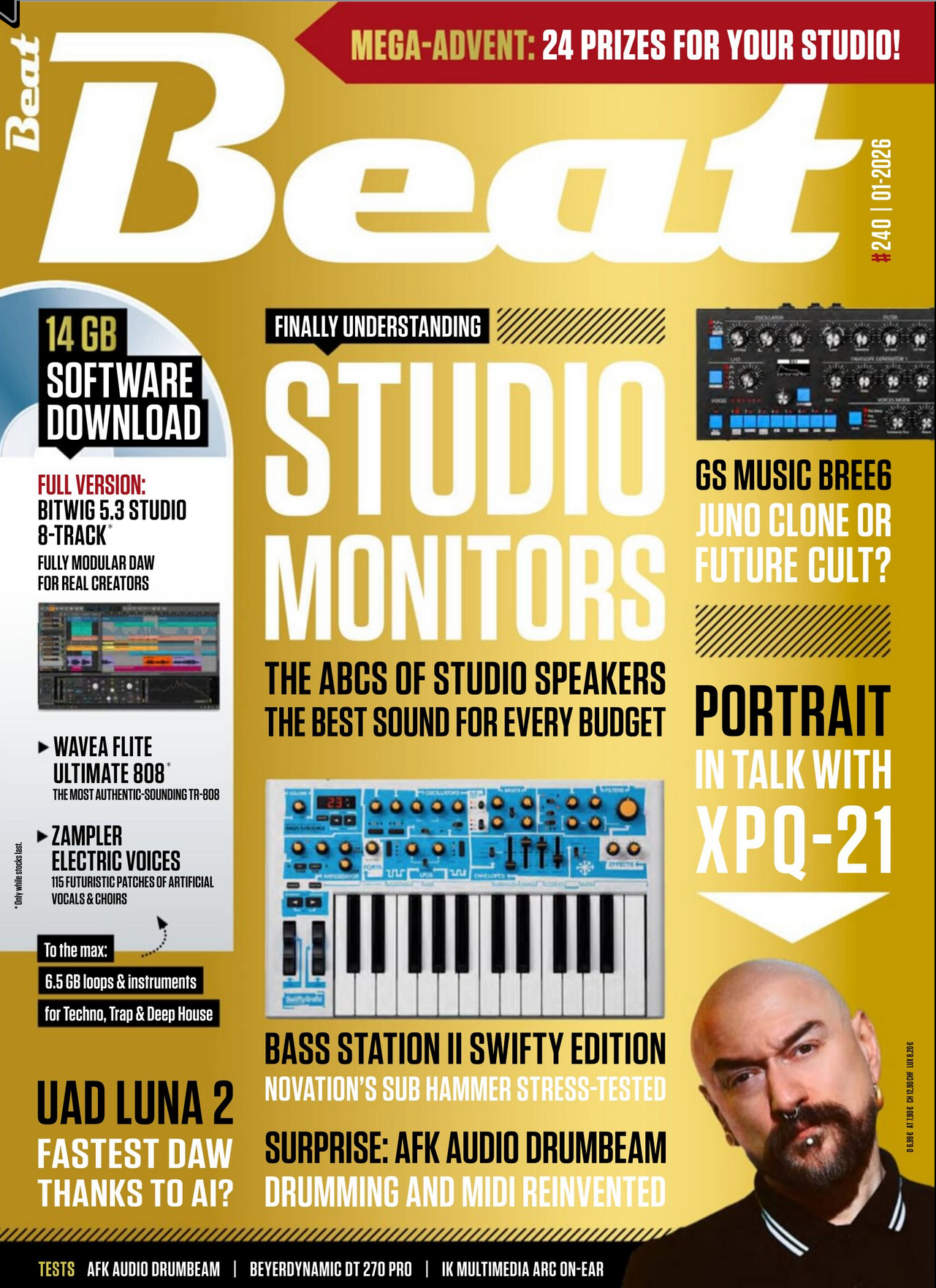
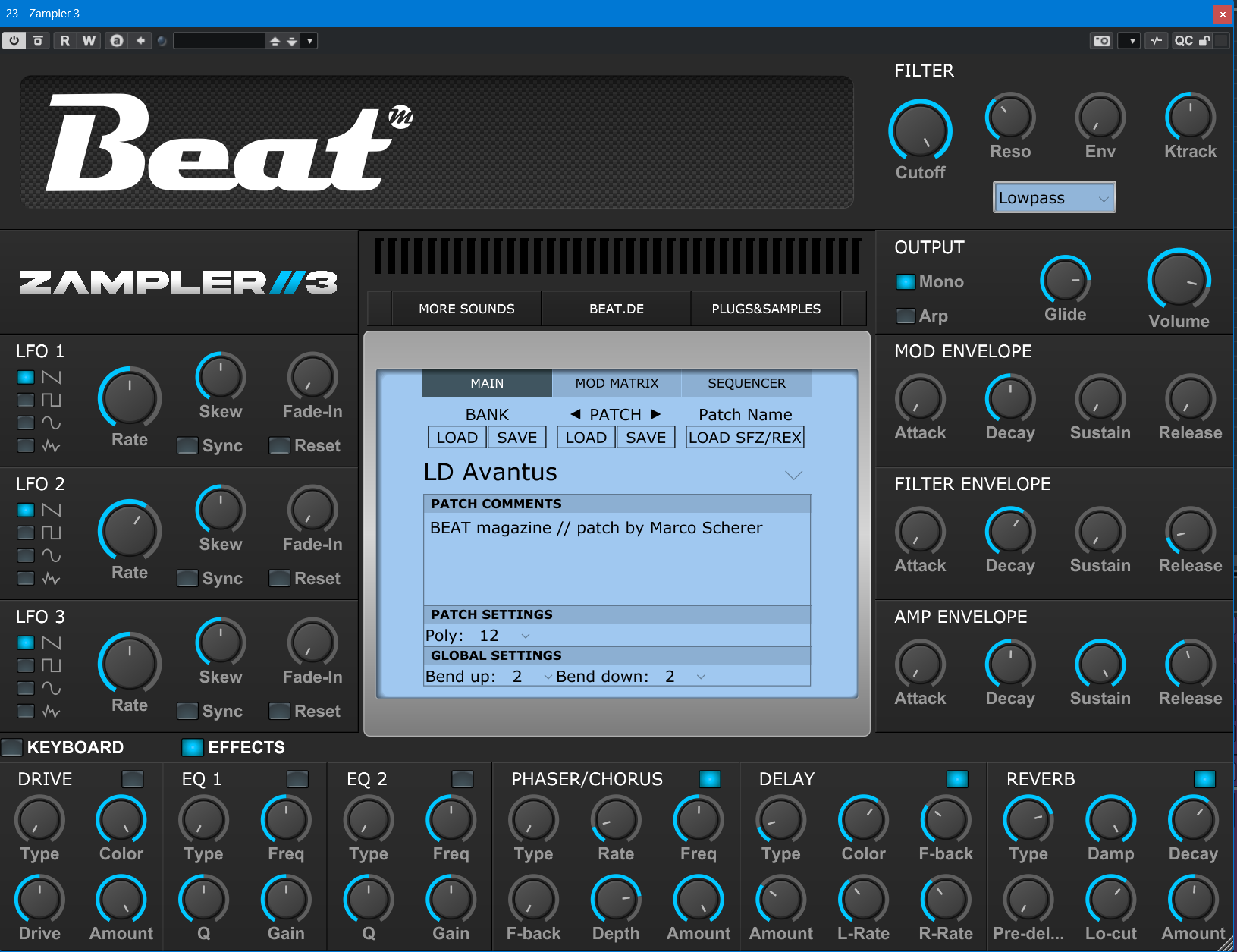
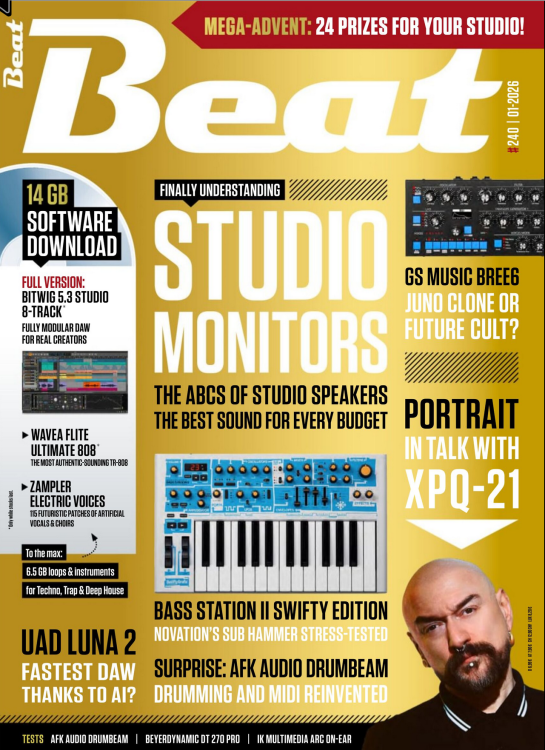
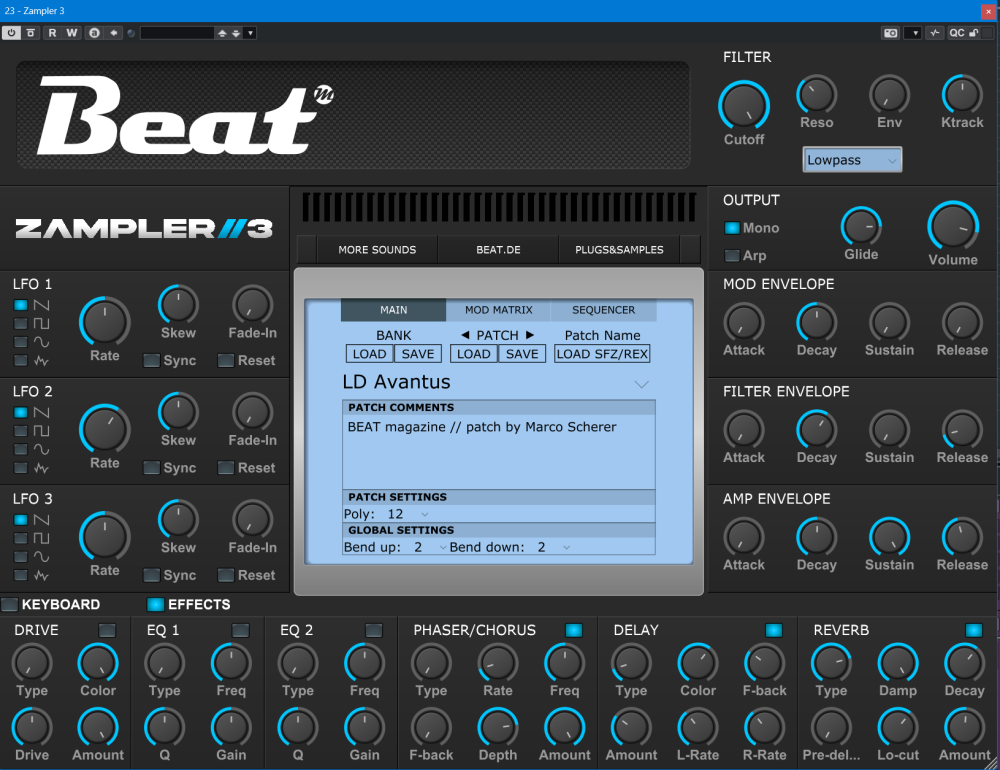
You can get it via the software download in Beat Magazine (page 9, issue #240 | 01-2026). It's stable, CPU-friendly, and runs all the libraries I used to use in version 2.5. The Windows' version is VST3. What's best about version 3 is that you can now resize it!
-
- 2
-

-