
quattj
-
Posts
51 -
Joined
-
Last visited
Everything posted by quattj
-
Yes, this is the issue I am referring to. I edit on my laptop. I have no other hardware attached for recording, performing, or anything else. I open a MIDI file that has been created and edited with various other pieces of software. I use Cakewalk/Sonar to trim and fade my files after most of the work is done elsewhere. My synths are softsynths. Typically, when I'm editing MIDI files, that is not the only thing I am doing on my laptop. And I'm not always at home, and I am not always where I can just have my audio blaring for some quick edits. And I have to manually select my "listening" output if I plug in or remove my headphones while using Sonar. Additionally if my headphones are the last thing used when I quit, and I don't have them plugged in next time, then I get a warning about a missing audio device. With any other application in my system, by using Coolsoft VirtualMIDISynth with a custom assortment of soundfonts. With Cakewalk 2022, prior to my forced upgrade to Sonar a few weeks ago, also via Coolsoft VirtualMIDISynth. This followed my system audio settings. I never had to manually assign my listening output, because it was handled by Windows. Sadly, with Sonar, my only "quick" option to hear MIDI without having to manually assign a VST to everything is TTS-1. These are strictly MIDI files and are never save as a Cakewalk/Sonar project file.
-
I use Sonar strictly for editing MIDI files.
-
Is there a way to get Sonar to follow system audio settings? I constantly have to go in to the preferences any time I connect or remove my earbuds or other external speakers/microphones. I'd like it to automatically switch to whatever the current Windows device is. Very jarring when I have put headphones in for privacy and my music starts blaring out of my laptop speakers.
-
Thanks! I used your idea and added the delete in to the existing forEachEvent loop, after the actual CC 11's are adjusted. Works like a charm! (if (== original_control_num ENVELOPE_CONTROLLER) (do (delete) ) ) Attached the modified script with my C-like notes 😅 I'll also have a look at your script for future projects 💪 EDIT: This only works well with the files I am currently editing, as they have expression controllers before/during almost every note, and the notes are generally very short or longer with multiple expression applied. I did have to manually add more expression to one of the songs because it had extended-length notes with only expression at the beginning, so the expression "fade out" went in large steps instead of smoothly. _expression-fadeout2.cal
-
I've been reading a CAL guide, and it seems CAL is very similar to LISP, a language I hated and have since purged from my memory 😜 That being said, I went through the script and rewrote it in a C-like language so I could process what was happening. I have now commented out this line ;(= Control.Num TARGET_CONTROLLER) which stops the added in #12 controllers from being converted to #11 controllers. The section that follows then still sets the existing #11 controllers to the correct values, thereby eliminating all of the extra overlapping controllers added with the script. Now I have a bunch of leftover #12 controllers, and need to delete them at the end of the script. I was looking at (EditCut [<from> <thru> <events> <filt> <tempos> <meters> <markers> <hole>]) but if I understand correctly, this can not be restricted to a specific controller? Unless there is some way to assign #12 to the active filters? Every parameter after "<thru>" is a boolean, so <filt> is either TRUE or FALSE to use filters.
-
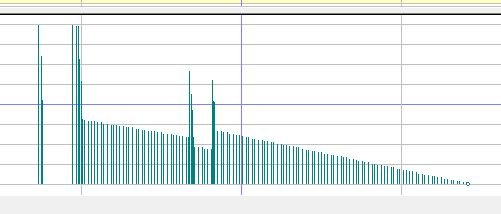
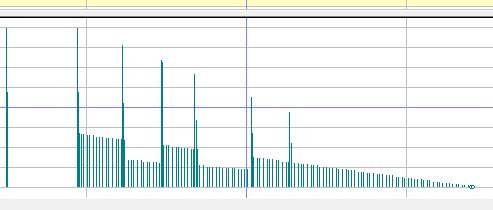
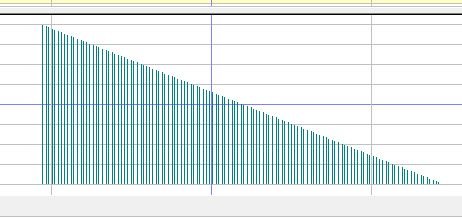
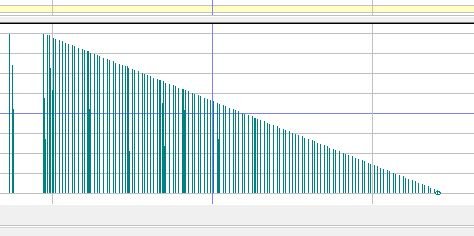
A user over at midi.org (and here as well I believe) created a CAL script for me several years ago to fade out the end of a midi file. It works by inserting "dummy" controllers (#12) and then combines them with any existing expression controllers (#11) to fade the file out. Up to now this has worked very well. However, with the current soundtrack I am working on, every channel MIDI 1-8 plays every instrument, alternating one note at a time. Similarly, every channel 9-16 plays percussion, again alternating every percussion one note at a time. There are 8 individual tracks for each instrument. I believe the issue I am having is that the inserted controllers are affecting the channels when they are not currently on the "active" track for that channel. I can't really wrap my head around half of what the script is doing internally. I can program in C languages just fine, but CAL script just look like gobbledygook to me. 😅 The midi.org forums have been essentially dead since the forum was changed over to new software last(?) year, so hoping to get a quicker response here. *** Essentially, what I would like to have the script modified to ONLY keep the expression controllers where they originally exist, but have them at the newly set level. *** As the script works right now, all of the new controllers remain and continue fading from the last level they encountered. This means if there were none to begin with, you would see a straight line in an expression viewer all the way from 127 down to 0. If there were already expression values, you would see the line go down but where any values already existed, it jumps to that percentage of the modified value, meaning it might go down and then up again. Here are a series of captures from the expression view in Sekaiju to show what I mean. Each of the first 3 images are different percussion instruments and their resulting final expression values after running the script. The fourth image is the combined overlay of how they appear when the file is played. You can see the individually, the expression would work well as a fade out, but when combined they are "destroyed" by the track that had no expression to begin with, and therefore has the full 127 to 0 fadeout. _expression-fadeout.cal
-
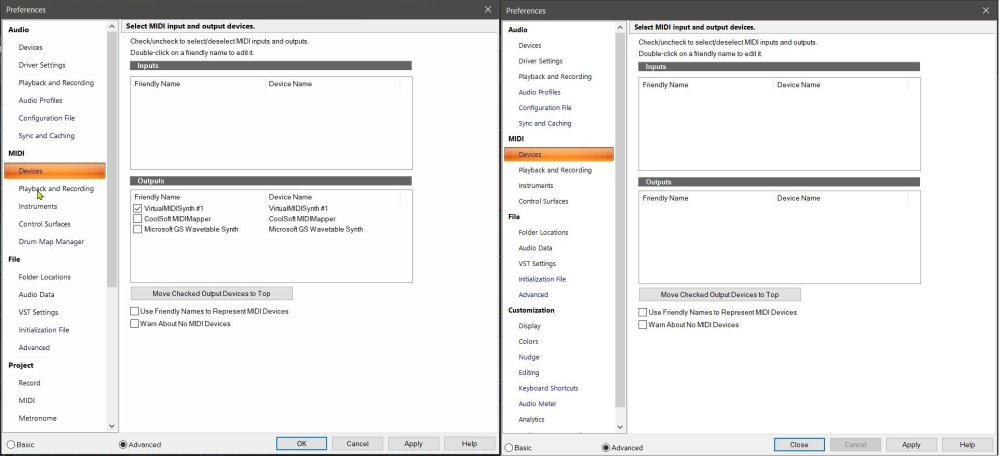
It plays only through what it can, and no, VirtualMIDISynth does not show as an option with UWP. MS GS Synth is the ONLY option, and ONLY in UWP mode, and even then it stutters and is awful. It still plays MIDI somehow in MME mode, even though NO devices are shown, but again it is awful and does not run through VirtualMIDISynth, which I have set as the default Windows MIDI playback device on my system. VirtualMIDISynth is essentially a "complete" implementation of GS MIDI support (and fairly complete XG support within the limitations of soundfonts), while the Microsoft version is very basic in its support, and many commands simply have no effect. In Cakewalk, VirtualMIDISynth showed as a device as displayed in my screenshots above. In Sonar, it does not, with no other changes to my computer.
-
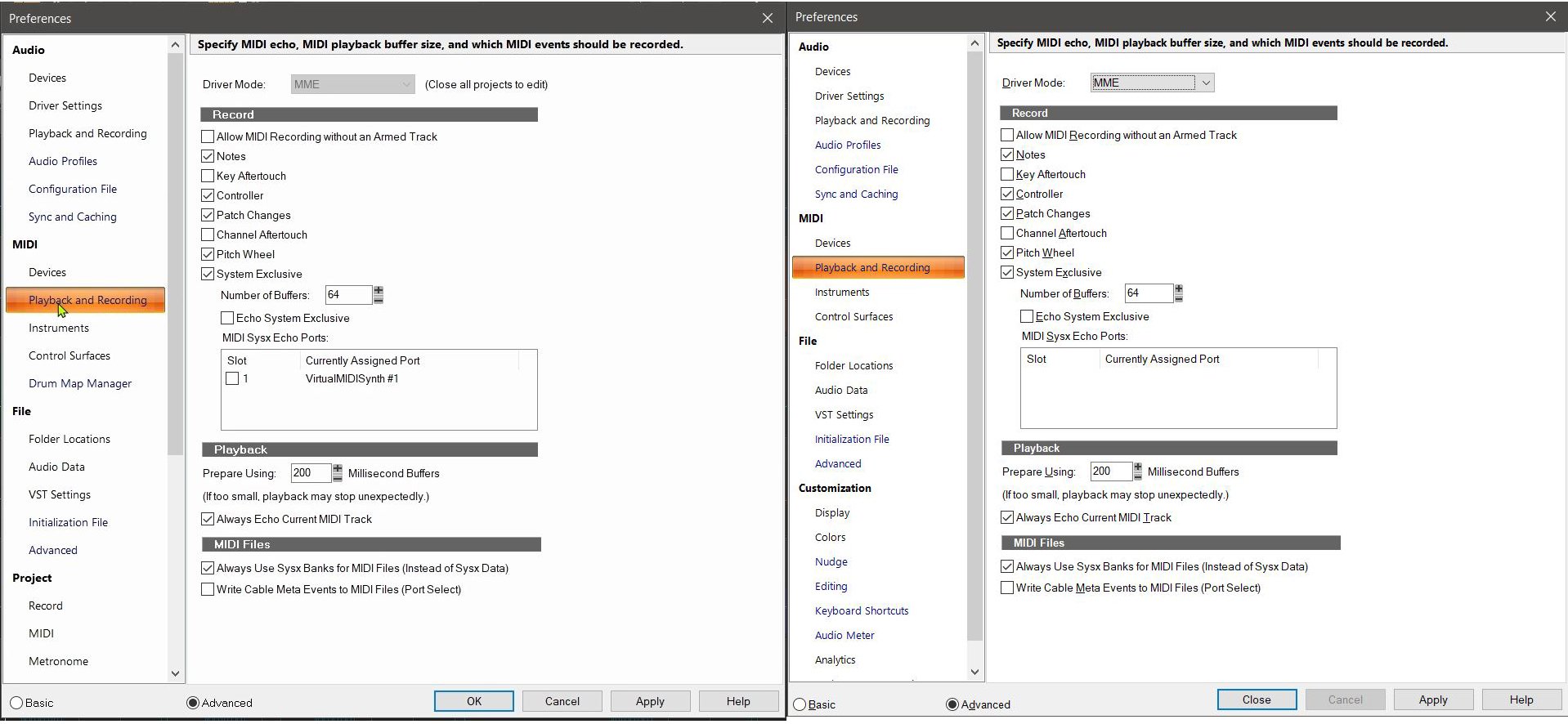
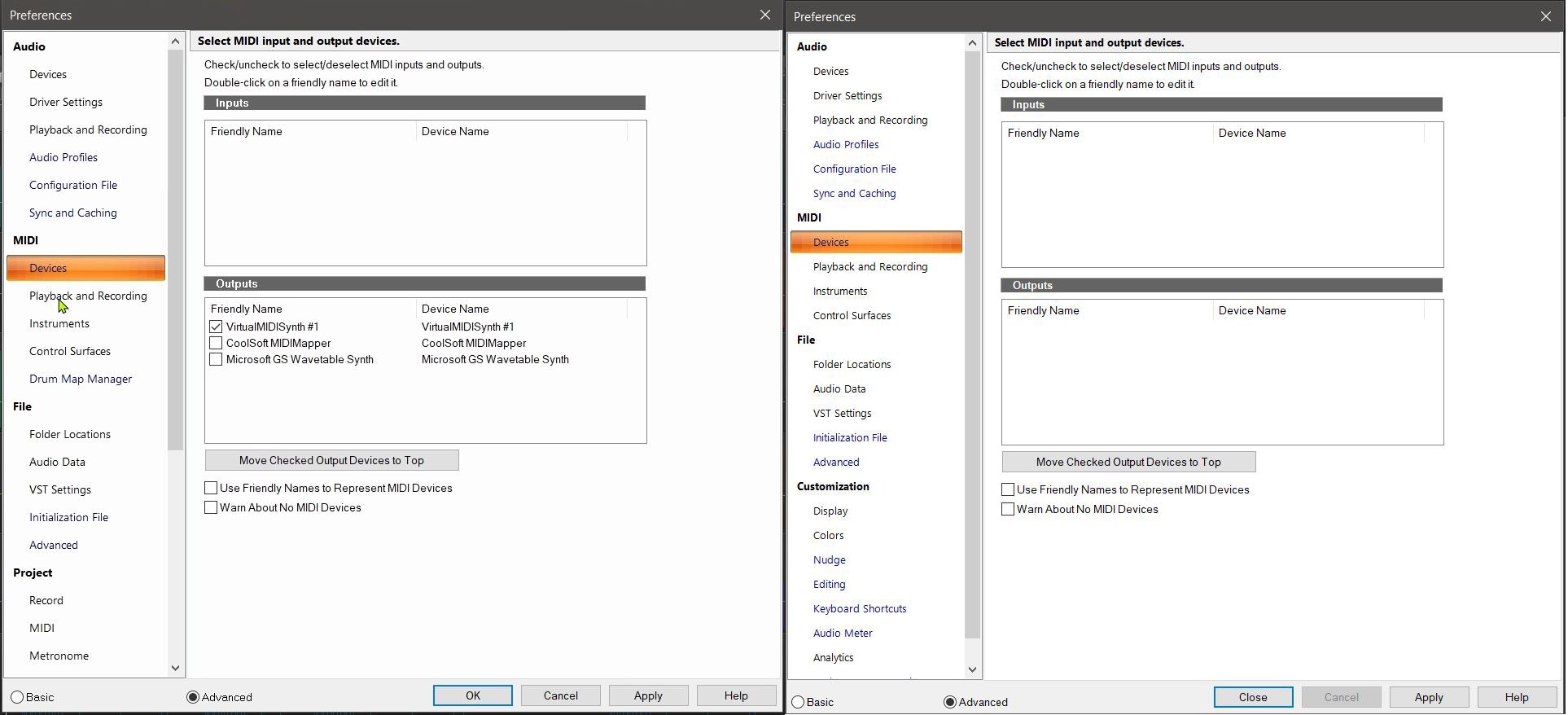
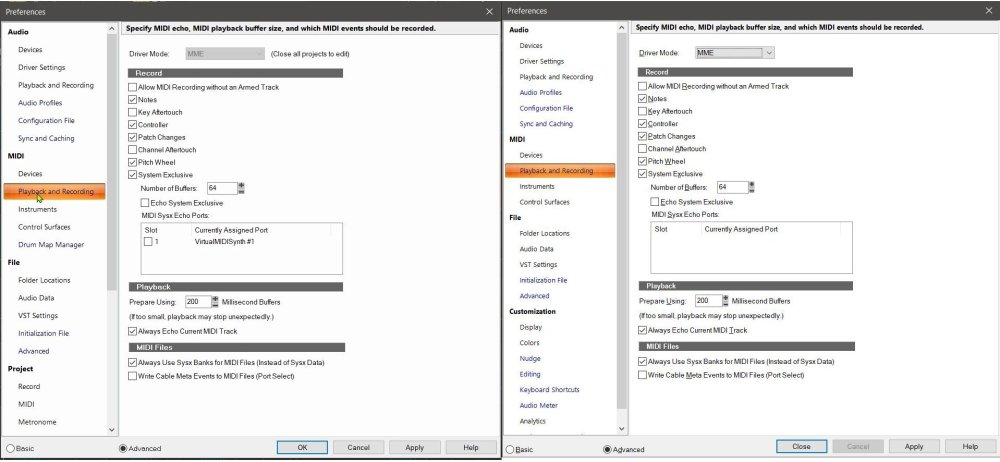
I did a recording of creating one of my soundtracks, and luckily I had an issue where I ran through all of the settings to check them, so I was able to pull screenshots of Cakewalk settings from the video to compare with Sonar. Both programs have "WASAPI Shared" selected under Audio->Playback and Recording I've attached screenshots of the comparison of Cakewalk vs Sonar for the MIDI preferences for ->Playback and Recording and ->Devices. Cakewalk on the left, Sonar on the right. All setting are identical, except that all devices are missing in Sonar.
-
Even if nothing was removed, something is not working the same in Sonar as it did in Cakewalk for MIDI playback devices. With MME selected as the MIDI driver mode, no inputs or outputs are shown. If I switch the MIDI driver mode to UWP, I can then see Microsoft GS Wavetable Synth as an output. However, either way it completely ignores/bypasses any of my system MIDI settings to use Coolsoft VirtualMIDISynth as the playback device, and playback sounds like garbage. I believe VirtualMIDISynth showed up as a separate device in Cakewalk, but now I have no way of checking. I do know that it played back properly as expected in Cakewalk, as no matter which app I played back with, it was and still is correct except for in Sonar. Changing the driver mode in the audio section has no effect on the MIDI section. Nothing has changed on my system (Windows 10 Home 22H2) since the last time I successfully used Cakewalk to edit my MIDI files on September 24th, except that I have now had to install Sonar.
-
I've submitted a bug report. I hope they fix it. I used Cakewalk solely for features I could not find elsewhere for editing my MIDI files. I've tried many other MIDI editors and DAWs and none are sufficient for what I need to do. I need the exact configuration I use on my machine, so VST SynthFont will not work as a complete substitution. I have tons of stacked soundfonts that I change and modify regularly, depending on the soundtrack I am working on at the time.
-
I've just installed Sonar for the first time after my Cakewalk activation finally expired. I use Coolsoft VirtualMIDISynth for my MIDI playback. It worked fine in Cakewalk. No MIDI devices are showing in Sonar preferences, and it defaults to using (I assume) the horrible Microsoft GS Synthesis. Editing MIDI files it literally the only thing I use(d) Cakewalk for because of the CAL script and file trimming functionality. Without proper MIDI playback my long-term project will suffer. How can I make it cooperate?
-
New release July 7 2025 Gradius III
-

CAL script for removing same event type on same tick?
quattj replied to quattj's topic in Cakewalk by BandLab
I realize it's been a while, but I am about to try this script again on my current soundtrack. However, I can't wrap my head around CAL. I modified it to have a tick duration of 1 instead of 15, which is fine. I'm going to switch it to 0. But, if I have 2 of the same events that are on the same tick, is it the first one that is removed? That is what I need for this particular soundtrack. EDIT: Actually, welp, I tried it out on a file using a resolution of 0 and 1, and it completely obliterated the file, removing all controllers within the resolution except the first one. For example, with a resolution of 1, this: 3: 2 |Controller | chan= 1 | contr=Volume H | value= 73 |Controller | chan= 1 | contr=Volume L | value= 17 |Controller | chan= 1 | contr=Pan H | value= 43 |Controller | chan= 1 | contr=Volume H | value= 80 |Controller | chan= 1 | contr=Volume L | value= 39 |Controller | chan= 1 | contr=Pan H | value= 64 124 |Controller | chan= 1 | contr=Volume H | value= 94 |Controller | chan= 1 | contr=Volume L | value= 67 |Controller | chan= 1 | contr=Pan H | value= 37 125 |Controller | chan= 1 | contr=Volume H | value=103 |Controller | chan= 1 | contr=Volume L | value= 91 |Controller | chan= 1 | contr=Pan H | value= 64 186 |Controller | chan= 1 | contr=Volume H | value= 90 |Controller | chan= 1 | contr=Volume L | value= 74 |Controller | chan= 1 | contr=Pan H | value=106 |Controller | chan= 1 | contr=Volume H | value= 63 |Controller | chan= 1 | contr=Volume L | value= 32 |Controller | chan= 1 | contr=Pan H | value= 64 189 |Pitch Wheel | chan= 1 | bend=100 |On Note | chan= 1 | pitch=G 2 | vol=100 got nuked in to this: 3: 2 |Controller | chan= 1 | contr=Volume H | value= 73 124 |Controller | chan= 1 | contr=Volume H | value= 94 186 |Controller | chan= 1 | contr=Volume H | value= 90 |Controller | chan= 1 | contr=Volume H | value= 63 189 |Pitch Wheel | chan= 1 | bend=100 |On Note | chan= 1 | pitch=G 2 | vol=100 As you can see, all Volume L and Pan got stripped. No bueno 😪 -
Split single instrument to multiple tracks/channels
quattj replied to quattj's topic in Cakewalk by BandLab
I'm still open to any cal scripts that might be able to automate at least part of this. I did end up doing almost exactly what was suggested using Sekaiju. I cloned the offending tracks, and deleted alternating notes on each, as well as pitch bends and expression changes that were also causing some glitches. One track only had issues between major sections of the track, so for that one, I just bulk deleted everything in one major section per track, alternating of course. It sounds loads better now. -
I have a MIDI file that was created with a converter. It makes extensive use of pitch bend. I am running in to an issue where the release from one note is being modified by the pitch bend for the next note. It sounds awful. I tried testing monophonic mode, but that sucks the life out of the song. So what I would like to do is split the instrument to alternate notes between two tracks/channels any time there is a new pitch bend, thus giving each note the proper time it needs to fade away without being improperly pitch bent. The corresponding pitch bends themselves would also need to be moved over to the alternate track. I'm attaching the file, in case you want to mess around with it. I've already gone through and manually removed roughly 50% of all the pitch bends, as the converter file resolution is very low (240 TPQN) and it sounded even worse with sometimes doubled or even tripled pitch bends of differing amounts within 0-2 ticks. I also attached the previous version without those bends removed. 28 Continue clean repair GS mod3 smoothstart mod fix2 unbend56.mid 28 Continue clean repair GS mod3 smoothstart mod fix2.mid
-
New release January 22 2025! Super Tetris 2 + Bombliss
-
New release November 25 2024 Super Tetris 3
-
Thanks, and yikes. My files are too varied for this to be feasible, especially since I don't know the exact number the volume would be after running the find/change. Events should be events. 😑 I worked around it by adding volume modification in to my own editor that I wrote for the project I am working on.
-
I am running a find/change for controller 7 Volume with value range 1 to 127 and replacing with value 40 to 127. In the resulting MIDI file, no volume should be below 40 unless it is 0. However, in 10 of the songs on the 31 song soundtrack I am working on, the volume remains at 28 because it is set at the very beginning of the track and there are no further volume changes in most of them to later boost it up. This can be confirmed in the Event Viewer, where that original volume of 28 setting does not appear in the list of events. I am using Cakewalk 2022.11. Can anyone confirm that this is either fixed or not fixed in newer versions? I am attaching a sample file. To replicate the issue, load the file click in any track and press CTRL-A to select all run Process -> Find/Change Select only Control: Number Min 7, Max 7; Value Min 1 Max 127 then press OK Set Control: Number Min 7, Max 7; Value Min 40 Max 127 then press OK Save the file. Then load it in an alternate editor/player/decompiler/whatever and check the volume values for Channel 7 and Channel 8. 16 Final Space noperc clean repair MERGE GS mod5.mid
-
I have been working on a project for the last several years remastering my favorite soundtracks from the Super Nintendo Entertainment System (SNES) as high quality GS MIDI Files, and uploading the completed soundtrack videos to YouTube, as well as having the MIDI files available for download. Cakewalk plays an important part in the process after the MIDI files are entering their final completion phase. I use it to trim each file down to 2 complete song loops, and add a 10 second fade-out at the end of each song using a custom CAL script. There is a "making of" time-lapse included at the end of the project playlist (though the process as a whole changes over time as I learn more and improve my techniques and workflow). New release July 5 2024! Super Valis IV The full SNES MIDI Remaster Project playlist can be found here: https://www.youtube.com/playlist?list=PLzNFPVjo8upworyQq0DXDTiCZzPP29Frw Soundtracks currently remastered: Axelay https://youtu.be/YJC4pmL1hGU Battletoads and Double Dragon: The Ultimate Team https://youtu.be/bt8FIzJuIu8 Legend of Zelda: A Link to the Past https://youtu.be/IknXcaQYxaY Prince Of Persia https://youtu.be/cFp1Dos_ltM Super Double Dragon https://youtu.be/6ICJpRNXzaM Super Castlevania IV https://youtu.be/r0-P66UJDzY Super Castlevania IV (Prototype) https://youtu.be/PPQJMg3UVng Super R-Type https://youtu.be/3ApAJHJDjc4 (new!) Super Valis IV https://youtu.be/I_UBQWP0OGI Bonus: Making of SMRP https://youtu.be/DKRim0JcXVg More info about the project/documentation can be found at https://drive.google.com/drive/folders/1op35g2ALiWenpXUNndyuHikq6ZlfmQuG?usp=drive_link with additional per-soundtrack info located in the video descriptions.
-
[snarky reply deleted] Got it. Thanks. ? Perfect, I will give this a shot. Thank you! ?
-
Yes, I am cutting them off before these events, which is why I am looking for a solution. The files are generated from a utility with infinite looping, and I am using Cakewalk to trim and fade them after 2 loops, so in the process I lose those events.
-
I have a bunch of long MIDI files for my project that I then trim to length when I am done. However, when I do this I lose controller events at the end of the track (CC 121, 123, 127) that I'd like to remain present without having to manually re-add them to every track of each song after I'm done trimming. Is there an easy way to cut off the end of a song without losing this info?
-
I am shortening existing MIDI files using the split option, and deleting the end parts that I do not need. However, in the process I am losing a few "end of track" events, like "Reset All Controllers", "Stop All Sound", etc. Is there somewhere in Cakewalk that I can automatically add things like this back to the ends of the cut tracks, or would I need to use some kind of scripting to do that?
-
The red highlighted box is the item in question. I have completed 145 other MIDI files using more or less the same technique I am using now. MIDI files are created with a utility. Files are edited with Anvil Studio, Sekaiju, and a few other pieces of software. Once the files are essentially "complete", I open them in Cakewalk, trim them to the length I need, and apply a fade out at the end using a CAL script. Up until now, none of the other 145 files ever showed the setup track, yet in this soundtrack (31 new files that I am opening, no importing) in Cakewalk multiple files are displaying the setup track in the Cakewalk track view. I understand how Cakewalk displays data. I understand it normally has separate views for certain things. To be clear, whether or not Cakewalk displays this track in the track view, it exists in the MIDI file. So I did just take a look at the event list in Cakewalk for that particular setup track. It shows a SYSEX reset (forget if it's the GM or GS) and a second line that said "Sysx Bank". So I checked a setting that I recently changed: "Always use Sysx Banks for MIDI files (instead of Sysx Data)" It was originally selected, and I recently unselected it. I tried re-selecting it, and the setup track is now not displaying. So to answer the question, something with the way Cakewalk handles SYSEX is the cause for the track displaying when this option is unchecked.